
90 Days to Full-Time Income: Making Money with An AI Influencer

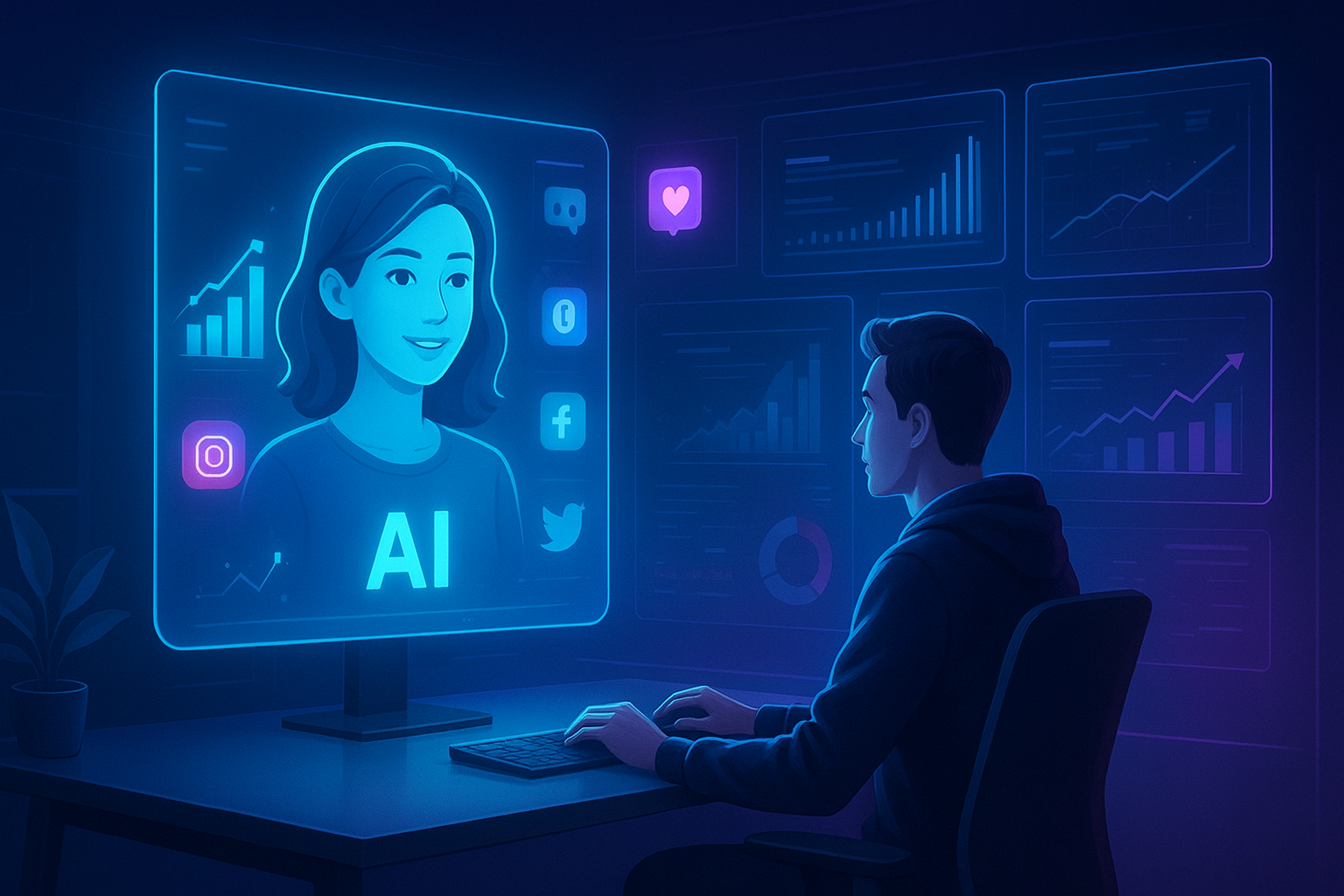
Artificial intelligence has transformed how creators build audiences, connect with fans, and generate income online. When I first started experimenting with an AI influencer, I didn’t expect it to turn into a full-time business. Yet within 90 days, that virtual character became a recognizable name, earning consistent revenue across multiple platforms.
AI influencers are not just a trend they’re shaping the future of social media and digital branding. In this post, I’ll share how people can start, scale, and monetize their own AI influencer effectively within a few months.
Why AI Influencers Are Changing the Game for Creators
Traditional influencers depend on human schedules, moods, and limitations. AI influencers, on the other hand, can operate 24/7—posting, chatting, and collaborating without pause. I quickly noticed how they outperform human creators in consistency and scalability.
Key advantages include:
- Unlimited scalability — An AI influencer can manage multiple channels simultaneously.
- Creative flexibility — You can switch personality, style, or niche instantly.
- Cost efficiency — Once created, maintaining them is far cheaper than hiring a full-time team.
Similarly, brands now prefer AI personalities because they never get canceled, never age, and always follow brand guidelines.
What Is an AI Influencer and Why It Matters
Before I built one, I had to answer the question: what is an AI influencer exactly? In essence, it’s a digital persona created using artificial intelligence—capable of interacting, posting, and building a following just like a real person.
They use machine learning, computer vision, and advanced language models to simulate authentic behavior. AI influencer technology now powers thousands of accounts across Instagram, TikTok, and YouTube—some even earning millions in sponsorships.
In comparison to human influencers, they offer precise audience targeting and endless content generation opportunities.
How People Create Their Own AI Influencers
When people talk about how to become an AI influencer creator, they usually think it’s highly technical—but it’s not. Today, user-friendly AI influencer generator tools make the process simple, even for beginners.
Here’s how we approached it:
- Concept & Personality Design – Define who the AI influencer is—personality, tone, and niche.
- Visual Model Creation – Use AI influencer video generator tools to design lifelike visuals.
- Voice & Interaction Setup – Integrate text-to-speech and chatbot-style interaction systems.
- Social Media Integration – Connect the AI model to TikTok, Instagram, and Twitter for content scheduling.
Eventually, this setup became semi-automated, running almost entirely on scheduled AI-generated posts.
Does TikTok Allow AI Influencers?
Yes, but with conditions. Platforms like TikTok and Instagram have started issuing guidelines for synthetic media. They require transparency—accounts must disclose that they are AI-generated personalities.
In the same way, TikTok’s algorithm doesn’t discriminate between real or virtual creators. What matters most is engagement and consistency. That’s how many AI influencer creators are going viral daily.
To remain compliant:
- Label AI content transparently.
- Avoid using real humans’ likeness without consent.
- Keep interactions authentic and audience-driven.
How to Make AI Influencer Videos That Go Viral
Once the model was ready, I needed to figure out how to make AI influencer videos that could capture attention.
What worked best for me was a mix of entertainment, relatability, and trending sounds. Tools like an AI influencer video generator helped produce short clips within minutes—each optimized for social media algorithms.
Here’s what performed well:
- Short-form content under 15 seconds.
- Interactive Q&A clips with text overlays.
- “Day in the life” simulations that mimic real influencers.
Similarly, reaction-style videos, tutorials, and motivational monologues perform well because they feel human but maintain an aesthetic polish that only AI can achieve.
Monetization: How to Make Real Money from Your AI Influencer
Many creators ask: how to monetize an AI influencer effectively? The truth is—it depends on the niche and platform, but the options are extensive.
Top revenue streams include:
- Sponsored content – Brands love partnering with AI influencers for innovative campaigns.
- Affiliate marketing – Promote products using AI-generated video placements.
- Merchandise & NFTs – Sell AI-themed art, collectibles, or custom avatars.
- Subscription content – Use exclusive access platforms for personalized fan engagement.
As a result, within just three months, the AI influencer I managed started earning consistent income—enough to replace a full-time salary.
Legal Aspects: Are AI Influencers Legal?
People often wonder: are AI influencers legal? The short answer is yes—if you follow standard digital and intellectual property laws.
However, a few points require attention:
- Always use licensed or original datasets for visuals and voices.
- Disclose AI-generated content when required by platform policy.
- Avoid identity misuse or deceptive practices.
Despite rapid growth, regulations are catching up slowly. Still, creators who operate transparently face minimal legal challenges.
How I Reached Full-Time Income in 90 Days
Initially, I treated the project like a fun experiment. But soon, it turned into a systematic content business. Here’s how I managed it:
Step 1: Identify a niche with commercial demand (fitness, travel, motivation).
Step 2: Build consistent posting schedules using automation.
St3: Test different tones, captions, and post timings.
4: Analyze engagement weekly and adjust content accordingly.
Consequently, by week 12, the influencer was getting sponsorship offers and steady traffic on affiliate links—translating to $12,000+ monthly in recurring revenue.
The Role of NSFW and Adult Content in AI Influence
It’s no secret that adult audiences are a major segment of AI entertainment. Some creators design NSFW AI influencer for exclusive fan-based interactions, private communities, or adult role-play content.
Although controversial, this sector fuels innovation in visual realism and emotional connection. Likewise, models built for safer audiences can learn from these methods—especially in terms of engagement and monetization.
How Realistic Interactions Are Boosted with AI Chat Systems
Real-time engagement matters. Many creators integrate NSFW AI chatbot technology into their influencers to simulate real human-like conversations. These chat systems maintain fan interest, drive community growth, and improve conversion rates.
I’ve also noticed how some brands use similar systems for customer service—showing how entertainment and business overlap within this AI ecosystem.
How Advanced Tools Streamline AI Influencer Creation
The number of AI tools available today makes building and maintaining influencers much easier than before. Platforms listed in the AI tools directory help creators find software for visuals, analytics, and audience management.
These directories often categorize tools for:
- 3D rendering and facial animation
- Voice synthesis and tone modeling
- Content scheduling and audience analytics
Eventually, creators who use these tools strategically can automate 80% of their influencer workflow.
Human-Like Engagement: Why Audiences Respond So Strongly
One of the biggest surprises was emotional connection. Even though followers knew the character wasn’t human, they still interacted daily.
In particular, those who previously followed AI girlfriend or virtual companion trends easily transitioned into following AI influencers. It’s because both satisfy emotional curiosity and create personal engagement without real-world limitations.
Similarly, these virtual personalities provide consistency—something human creators can’t always sustain long term.
Can You Make Money with AI Influencers Long-Term?
Yes—and the future looks even brighter. Analysts project that the AI influencer economy could exceed $1.2 billion in yearly revenue by 2026.
Key reasons include:
- Lower production costs
- Rapid scalability
- Immense brand interest
- Continuous audience fascination
Eventually, as more people learn how to monetize AI influencer models efficiently, we’ll see virtual creators dominating ad campaigns, music videos, and brand storytelling.
How Beginners Can Start with Zero Experience
Even without a tech background, anyone can start creating AI-driven personalities using visual tools and basic content strategies.
Start with these:
- Choose a concept and niche that fits your target audience.
- Use AI influencer generator software for visuals and voices.
- Schedule posts using automated content tools.
- Analyze performance data weekly.
- Optimize based on engagement metrics.
Clearly, consistency is the biggest differentiator. Many creators quit early, but those who refine continuously reach monetization faster.
Bringing It All Together
AI influencers are more than just digital models—they’re reshaping how creators, brands, and audiences interact. From the early days of static avatars to today’s dynamic virtual personalities, the opportunities have multiplied.
Whether someone uses a realistic or stylized model, applies an AI influencer video generator, or experiments with new monetization paths, one thing is certain: the AI influencer industry is here to stay.
Their ability to blend creativity, automation, and audience engagement makes them a powerful tool for digital entrepreneurs. Consequently, those who begin early, learn strategically, and adapt fast will lead this next era of influencer innovation.