

Canada Postal Workers Strike

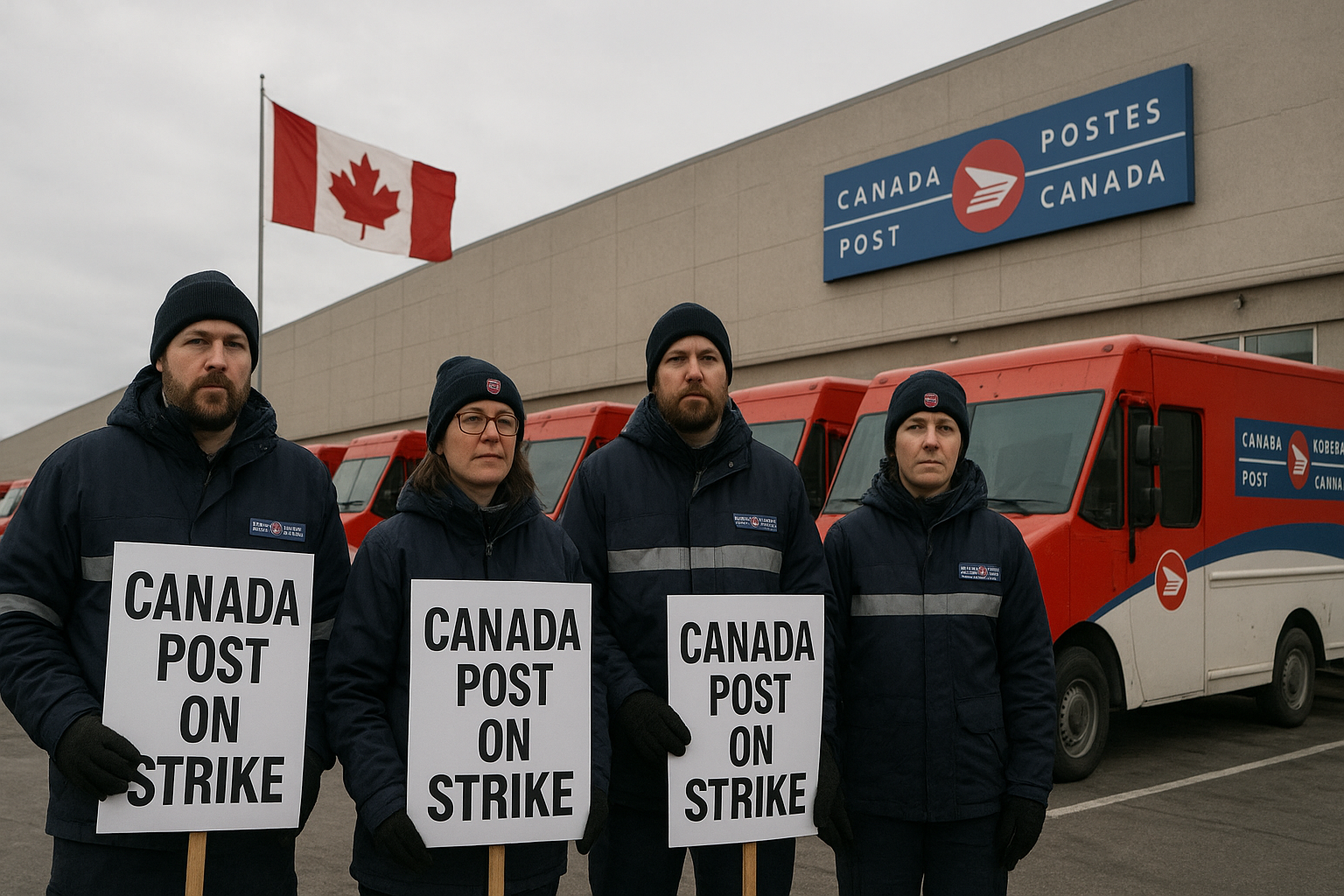
The strike by Canada Post workers has become one of the most talked-about labour disputes in recent years. Millions of Canadians rely on Canada Post for daily communication, online shopping, business shipments, government documents, and important deliveries. Any problem affects the whole country right away. The strike has brought back to light the problems that Canada’s postal system is facing, such as money problems, the need to modernise, worker concerns, and the future of public mail services.
This article goes into great detail about the strike, including what caused it, what postal workers want, how it is affecting Canadians, and what might happen next. This article is fully optimised for the keyword “Canada postal workers strike.” Its goal is to rank highly in search engines while giving readers accurate, professional, and easy-to-understand information.
Learning about the history of the Canada Postal Workers Strike
To understand the strike by Canada Post workers, you need to know that there have been problems between Canada Post and its workers for a long time. Postal delivery has its own set of problems that are different from those in other industries. These include fewer letters being sent, a huge rise in the number of packages being sent, higher operating costs, and higher expectations for quick delivery.
Canada Post is under financial stress.
Canada Post has been saying for years that its income from regular mail is going down. The number of letters sent has gone down a lot as more people use digital communication. At the same time, the number of packages has gone up because people are shopping online, but delivering packages is more work and costs more. This combination has put more and more financial pressure on people.
Because of this, Canada Post has suggested a number of changes, such as cutting back on home delivery, changing how often packages are delivered, reorganising delivery routes, and updating sorting systems. But a lot of these changes have a direct impact on workers.
Concerns of Workers and Demands of Unions
The Canadian Union of Postal Workers (CUPW) has long spoken out about the following issues that postal workers are worried about:
Job safety
- More work to do
- Pay that is fair
- Conditions of safety
- Protection for rural delivery
- Fear of privatisation
Less services hurting communities that are already weak
Workers say that even though demand for parcels is going up, staffing levels and pay have not kept up. Many people say they have more work to do, especially during busy shopping times, and they are worried that the changes could mean losing their jobs or having fewer hours.
These tensions got a lot worse, which led to the nationwide strike.
What caused the strike by postal workers in Canada
The strike by postal workers in Canada was not caused by one thing, but by a mix of economic, operational, and labor-relations problems.
1. Worries about job security
Fear of losing their jobs was one of the main reasons for the strike. Ending door-to-door delivery, closing some rural post offices, and increasing automation are all proposed changes that would directly affect thousands of postal workers.
2. Putting more pressure on the workload
Carriers have to work harder as the number of packages they have to deliver grows. Many postal workers say they have to deliver heavier packages, work longer hours, and deal with unexpected spikes in mail volume without getting paid enough.
3. Disagreements over pay and benefits
The union has asked for pay raises that take into account rising living costs and inflation. Many rural and suburban mail carriers use their own cars and have asked for fair pay for gas, mileage, and vehicle maintenance.
4. Disagreement About Plans to Modernise
Canada Post has said that it wants to modernise the system, but workers say that these changes put saving money ahead of worker health and service quality. The union says that modernisation shouldn’t cost jobs or important community services.
5. The government gets involved
The strike was unavoidable when talks broke down and mediators couldn’t come up with a contract that both sides were happy with. Trying to stop the strike only made the conflict last longer before it turned into a full-blown national action.
The Canada Postal Workers Strike Timeline
This is a simple timeline that shows the most important events that led up to the strike:
Late 2024: Postal workers and Canada Post are at odds over suggested changes.
First wave of strikes starts in November 2024 after talks fail.
December 2024: The strike is put on hold for a short time because the government got involved.
Mid-2025: Canada Post says it will make big changes to how it works, which worries unions again.
September 2025: Postal workers in Canada go on strike across the country.
Fall 2025: The strike goes from full shutdowns to rotating walkouts.
This ongoing fight has left millions of Canadians and thousands of businesses in the dark.
How the strike by Canada Post workers affects Canadians
The strike by Canada Post workers has effects that go beyond just mail being late. It has an impact on the economy and daily life.
1. Late delivery of mail and packages
During the strike, mail and packages can sit in sorting centres for days or even weeks. Canadians who are expecting:
- Shopping online
- Statements and bills
- Official papers from the government
- Checks and benefits
- Passports
- Legal documents
- Drugs
are having trouble and are unsure of what to do.
2. Problems for Small Businesses
A lot of small businesses depend on Canada Post for cheap shipping. The strike has caused:
- Delayed delivery of orders
- Costs go up when you use private couriers.
- Complaints from customers
- Sales that were lost and orders that were cancelled
- Hard to keep track of stock
A lot of businesses have said that the strike is one of the biggest problems since the pandemic.
3. Effects on communities that are far away or in the country
Canada Post is more important to rural, remote, and Indigenous communities than it is to cities. The strike has caused the following for these communities:
- Delays in getting important medicine
- Communication that is broken
- Longer waits for benefits
- Less access to government services
Because these areas don’t have as many other courier options, the strike is especially hard on them.
4. Delays in Government Services
Things like IDs, tax forms, licenses, and official notices that the government gives out take a long time to get. Canadians who need important papers right away often have no other options.
Effect on Workers and the Postal Service
The strike is hurting the public, but postal workers are also feeling the stress of it all, both emotionally and financially. Always strike last. This fight is about more than just wages for many workers; it’s about protecting their future.
On the other hand, Canada Post says that structural changes are needed to stay in business for a long time. The company has to deal with rising costs, old infrastructure, and tough competition from other couriers.
Both sides agree that changes need to be made, but they disagree on how to do it without hurting workers or the quality of service.
What could happen because of the Canada Postal Workers Strike
The strike has made things unclear, but there are a few possible outcomes:
1. A new agreement for the whole group
Most strikes end with an agreement that both sides can live with. This could mean changes to pay, benefits, and protections for workers in rural areas.
2. Slowly getting more modern
Canada Post might still go ahead with plans to modernise, but probably at a slower pace or with some changes.
3. Change in Service
In some areas, especially cities with high costs, home delivery may happen less often in the future.
4. Changes in Government Policy
Because this affects the whole country, the federal government may step in with new rules or money to help.
5. More and more people are using private couriers
Businesses and people may start to depend more on private shipping options.
Questions and Answers (FAQs)
1. What is the reason for the Canada postal workers’ strike?
They are on strike because they want job security, fair pay, safe working conditions, and worries about modernization plans that could cut services or get rid of jobs.
2. How long will the strike go on?
The length of time depends on how the contract talks go. Strikes across the country often turn into rotating strikes until an agreement is reached.
3. Are you still getting mail?
Some places have service that changes every so often, while others are completely shut down. There will be delays all over the country.
4. What does the strike mean for businesses?
Businesses have to deal with slower shipping, higher courier costs, cancelled orders, and problems with their supply chains.
5. What about important things like medicines or papers from the government?
There may be delays with these. When possible, Canadians should use other ways to get their packages.
Final Thoughts
The strike by Canada Post workers shows that there are serious problems with the postal system, such as money problems, worker safety, and the future of national mail services. People, families, small businesses, big stores, and the economy as a whole all feel its effects.
Canadians hope for a fair and lasting solution that keeps Canada Post’s essential services while also protecting the rights and health of postal workers as negotiations continue. The strike is a turning point in the history of Canada’s postal system and its place in modern society, no matter what happens.