

How High Do Planes Travel

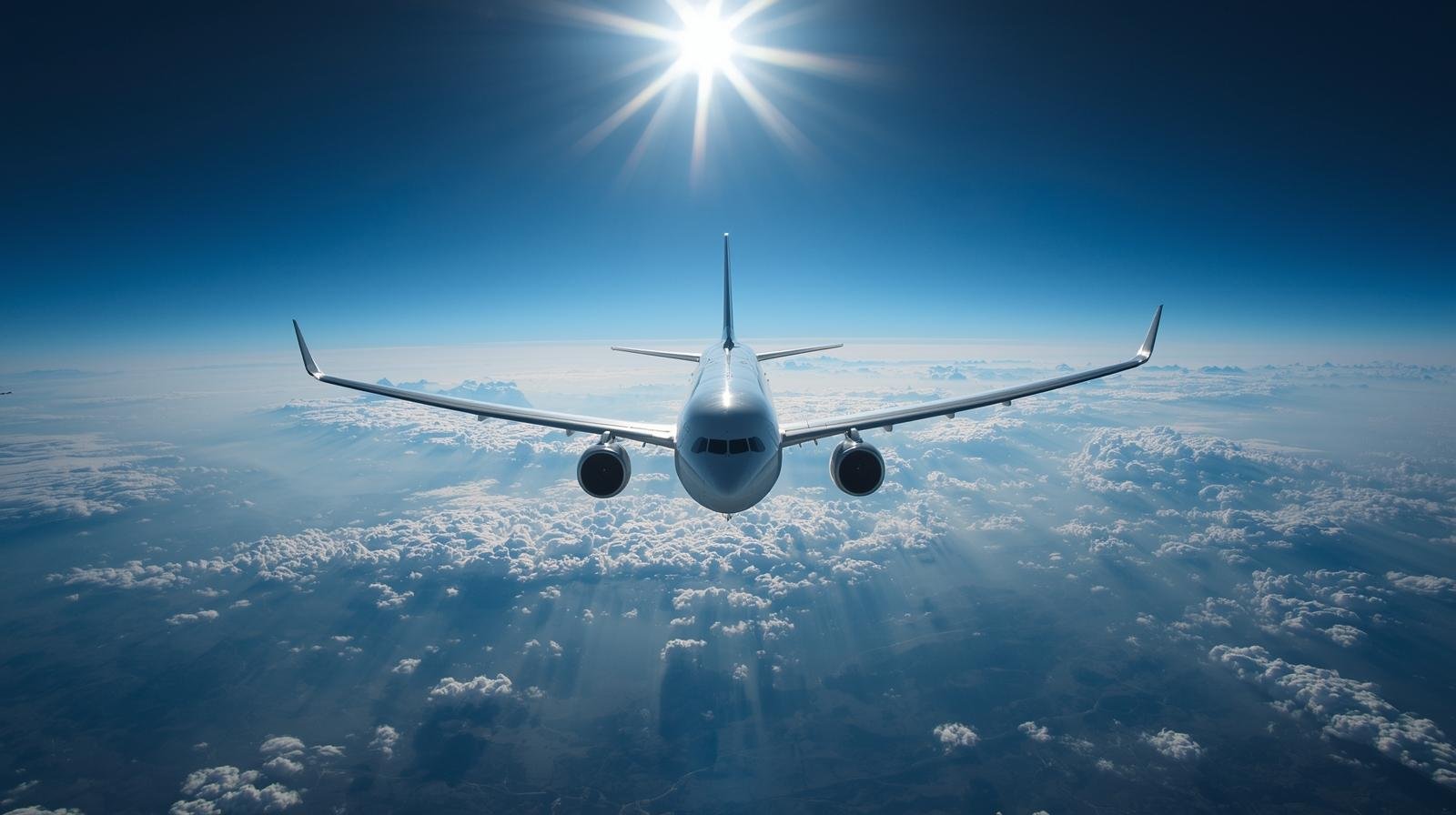
You’re not the only one who has looked out the window of an airplane and wondered how high planes fly. The sky looks like it goes on forever, but every flight has a specific range of altitudes that it can fly in. Flight altitude is very important for safety, efficiency, and comfort in aviation. For example, commercial jets fly high above the clouds, while military planes fly right to the edge of space.
Let’s talk about how high planes can really go, why they fly at those heights, and what factors affect how high they can really go.
How to Understand Flight Altitude
Flight altitude is the height of an airplane above sea level. There is a specific altitude range for each type of plane, from a small propeller plane to a huge Boeing 777. This range is meant to improve performance, safety, and fuel efficiency.
Planes don’t just go as high as they can; they fly at the height where the pressure, temperature, and engine performance are just right for fuel efficiency and stability.
How High Do Planes Travel That Carry Passengers Go?
Most commercial planes fly between 30,000 and 40,000 feet (9 to 12 kilometers) above the ocean. The cruising altitude is usually around 35,000 feet, which is a good height for a number of reasons:
- Fuel Efficiency: When planes fly higher, the air gets thinner, which cuts down on drag and lets them use less fuel.
- Smooth Flights: Most storms and turbulence happen below 25,000 feet, so flying above that level is smoother.
- Safety and Space: The altitude layers help air traffic controllers keep thousands of flights apart every day.
- Engine Performance: Jet engines work well in cold, thin air, which is what they get at 35,000 feet.
At that height, the temperature outside can drop to about -55°C (-67°F), but inside the cabin, passengers are comfortable and the climate is controlled.
How High Do Military and Private Planes Fly?
Different kinds of planes fly at different heights:
- Private Jets: Private jets are smaller and lighter than commercial planes. They usually fly between 41,000 and 45,000 feet. The Gulfstream G700 and other high-performance jets can go as high as 51,000 feet.
- Military Jets: The F-22 Raptor and F-15 Eagle are examples of fighter jets that can fly up to 65,000 feet, which is almost the edge of the stratosphere.
- Small Propeller Planes: These planes usually fly between 10,000 and 15,000 feet, but this can change based on the type of engine they have and the weather.
- NASA’s X-15 holds the record for the highest flight by a powered airplane. It flew to 354,200 feet (107,960 meters), which is technically in space!
Why Can’t Planes Go Higher?
You might think that flying higher is always better, but that’s not true. The air gets too thin for engines to make enough thrust or wings to make lift above a certain height.
If a plane goes too high, it could end up in a dangerous place known as the “coffin corner.” This is when the difference between the minimum speed needed to stay in the air and the maximum safe speed gets very small, which makes flying dangerous and unstable.
Because of this, every plane has a service ceiling, which is the highest point it can safely fly in normal conditions.
Do planes fly higher than Mount Everest?
Yes! Mount Everest is the tallest mountain in the world, at 29,032 feet (8,849 meters). But most commercial jets fly 5,000 to 10,000 feet higher than that. So when you’re flying at 35,000 feet, you’re really flying way above the highest point on Earth.
The Atmosphere’s Role in Flight Height
There are different layers in the Earth’s atmosphere. Planes mostly fly in the lower stratosphere, which is just above the troposphere.
All weather happens in the troposphere, including clouds, rain, and turbulence.
The stratosphere has thin, calm air that is great for long-distance cruising.
This area is great for planes because it’s stable, uses less fuel, and is above most weather patterns.
How Pilots Choose the Height of Their Flights
Before every flight, the altitude is carefully planned. What pilots and air traffic controllers think about is
- The weather
- Air traffic routes
- Weight and performance of airplanes
- The speed and direction of the wind
- Optimizing fuel
For example, because of wind patterns like the jet stream, a flight going east might fly a little higher than one going west.
What Happens When a Plane Loses Cabin Pressure at a High Altitude?
If a plane suddenly loses cabin pressure at 35,000 feet, oxygen masks automatically drop from the ceiling. Pilots immediately begin an emergency descent to around 10,000 feet, where passengers can breathe normally without supplemental oxygen.
Modern planes are built to handle such emergencies with multiple safety systems in place, making it extremely rare and manageable.
Interesting Facts About How High Planes Travel
The fastest passenger plane, the Concorde, flew at 60,000 feet — twice as high as modern jets.
Space tourism flights like those by Blue Origin reach over 300,000 feet, technically exiting Earth’s atmosphere.
Passenger planes burn most of their fuel while climbing, not while cruising.
FAQs
1. How high do planes travel on international flights?
International flights often cruise between 33,000 and 38,000 feet. Longer routes may use slightly higher altitudes for fuel efficiency and to take advantage of favorable jet streams.
2. How high can a Boeing 777 or Airbus A380 fly?
A Boeing 777 typically cruises around 35,000–43,000 feet, while the Airbus A380 — one of the largest passenger planes — cruises around 43,000 feet maximum.
3. Can planes fly into space?
No. Even the highest-flying jets cannot reach space. Space officially begins at the Kármán line, about 62 miles (100 km) above sea level — far beyond the reach of standard aircraft.
4. Why do pilots sometimes change altitude mid-flight?
Pilots adjust altitude to avoid turbulence, optimize fuel use, or catch favorable wind currents. It’s a normal part of flight management.
5. What is the lowest altitude a plane can safely fly?
During takeoff and landing, planes can fly below 1,000 feet. However, for long-distance travel, it’s unsafe and inefficient to fly at low altitudes due to air density and obstacles.
Conclusion
So, How High Do Planes Travel? On average, around 35,000 feet a height chosen for optimal fuel efficiency, smooth air, and safe navigation.
Every aircraft has its limits, but this cruising altitude represents the perfect balance between science, safety, and performance.
Next time you gaze out your airplane window, remember you’re not just flying; you’re traveling higher than Everest, above the weather, and right in the perfect layer of the sky where aviation mastery meets nature’s design.